Good above ground pool steps match your wall height, carry the weight of everyone who will use them and give you a handrail on each side. Once those three boxes are ticked, choose between resin steps that sit in the pool and a metal stair unit, put a mat under the base to protect the liner, and add weight so the steps stay put. That covers most of the decision.
Steps vs ladders: what is the difference
A ladder has narrow treads and a steep climb. You face the ladder and pull yourself up rung by rung. Steps have wider, deeper treads at a gentler angle, so you can walk in facing the water with a rail in each hand. That makes steps easier for kids, older swimmers and anyone with sore knees.
The trade off is space. Steps take up more of the pool floor and are heavier to lift out at the end of the season. If your pool is small and everyone in the family climbs easily, a ladder from our above ground pool ladders range may suit you better. For a side by side look at every style, read our guide to A-frame, deck and in-pool ladders.
Match above ground pool steps to your wall height
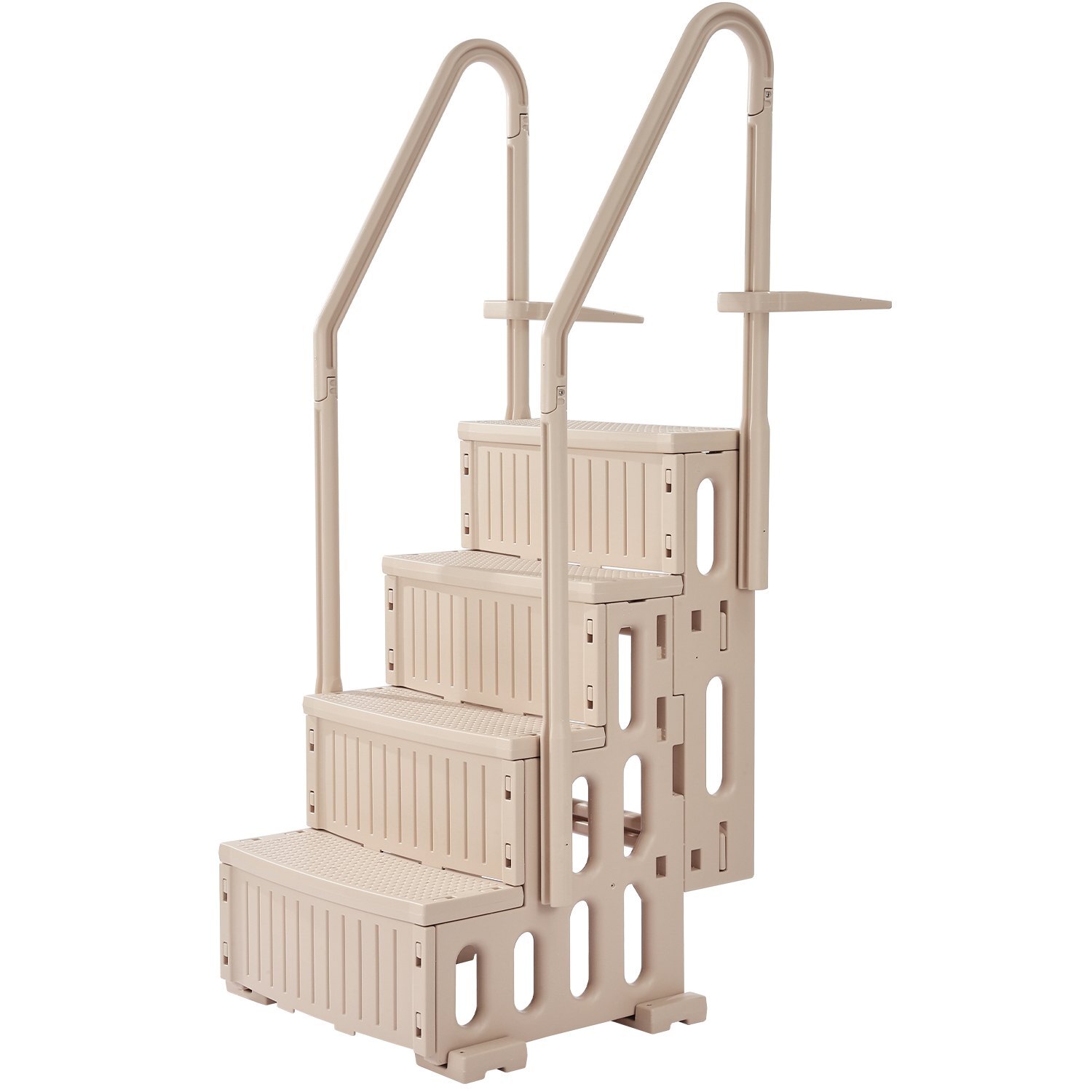
Measure from the ground outside the pool to the top of the top rail. That is your wall height, and every set of steps lists the range it fits. Here are a few from our pool steps range, with the specs their listings give:
| Model | Steps | Wall height | Weight rating |
|---|---|---|---|
| VEVOR 3 step pool stairs | 3 | 36 to 48 in | 400 lb |
| VEVOR 4 step pool stairs | 4 | 48 to 54 in | 400 lb |
| XtremepowerUS heavy duty steps | 4 | 48 to 54 in, flat bottom pools | 300 lb |
| Vinyl Works adjustable steps | 4 | Adjusts up to 60 in | 300 lb |
If your wall sits right at the edge of a range, check the manufacturer’s instructions before you order. A step unit that is too short leaves a big gap at the top. One that is too tall will not sit flat.
Weight ratings: read the number
Every step unit has a weight rating set by the manufacturer. Plan for the heaviest person who will use the steps, and keep to one person on the steps at a time unless the instructions say otherwise. The four models above run from 300 lb to 400 lb, so there is room to choose. A higher rating does not change how you use the steps. Keep the treads clean, and do not let anyone dive or jump from them.
Pool steps with handrails
Handrails make the biggest difference for anyone who needs support getting out of the water. Look for a rail on each side so you can hold on with both hands. Check how far apart the rails are and how high they stand above the top step.
- The Vinyl Works adjustable steps have two rails set 24 in apart.
- The VEVOR 3 and 4 step stairs both have double handrails.
- The Vinyl Works 60 inch pool step ladder has 31.5 in aluminum handrails and an 11.75 in rise between steps.
A lower rise between steps and deeper treads mean less effort on each step. Those two numbers are worth comparing when you shop for pool steps with handrails.
In-pool resin steps vs metal stair units
Most above ground pool stairs are plastic: resin, PE or HDPE. They do not rust, and many have hollow bodies you fill with sand so they sit firm on the pool floor. The XtremepowerUS steps, for example, snap together and take sand as ballast. The sand is not included, so have it ready on install day.
Metal stair units use a stainless or coated steel frame with plastic treads. They are lighter to lift in and out. Stainless steel needs a fresh water rinse now and then to stay clean. Coated carbon steel can rust where the coating chips, so check it each season.
Plastic steps usually win for a pool that stays set up all summer. Metal frames suit people who take the steps out often.
Protect your liner with a mat
The base of any step unit presses on the vinyl liner every time someone climbs in. Over a season that rubbing can wear the liner. A mat under the base spreads the load and keeps the feet off the vinyl. Our PVC pool ladder mat comes in four sizes up to 60 x 60 in, which covers wide step units. You can trim it to fit. See all sizes in pool ladder mats.
Lay the mat flat before you set the steps on it. A fold or wrinkle under the base can rock the unit.
How to keep above ground pool steps from floating
Plastic steps are buoyant. If they are not weighted, they shift, tip or lift off the floor. Here is what works:
- Fill the hollow parts with sand if the manufacturer allows it. Sand is much denser than water.
- Do not count on water fill alone. Water inside a unit that sits underwater adds very little hold.
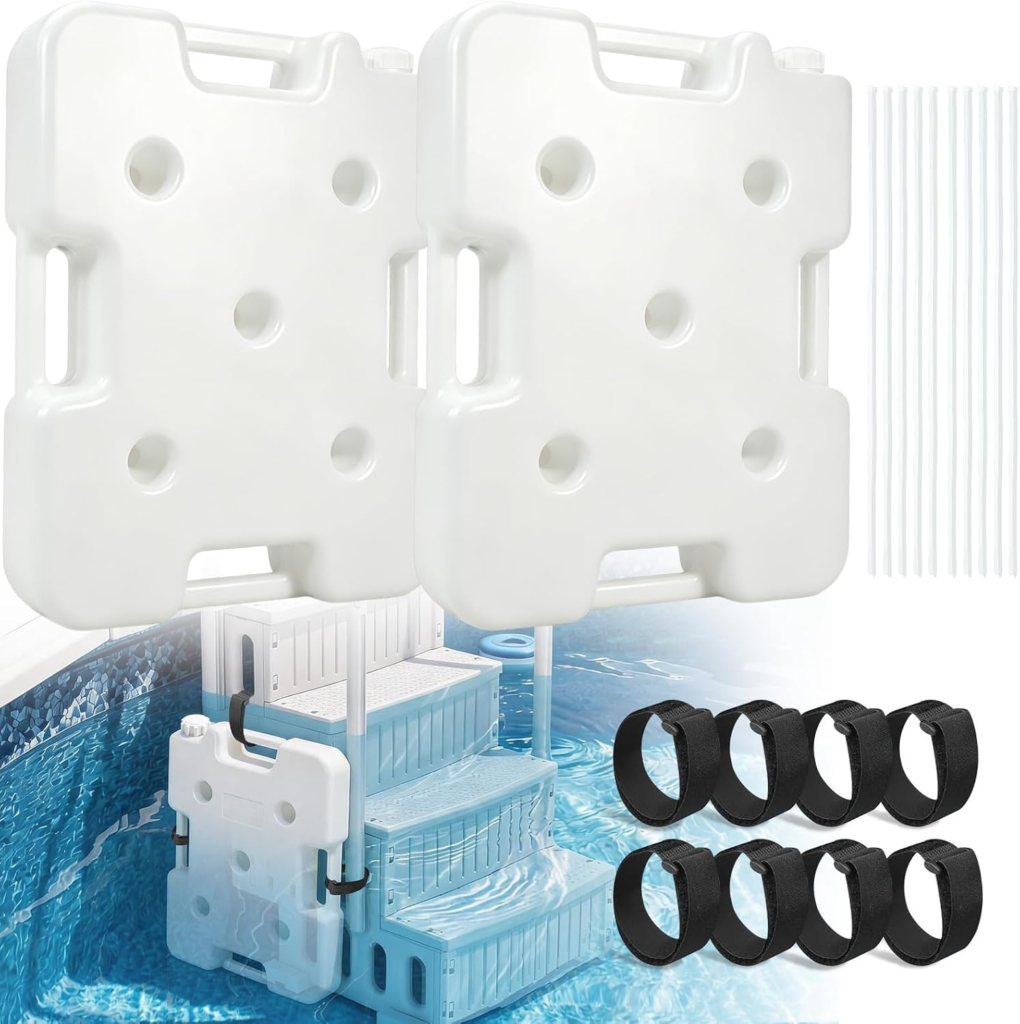
- Add weight bags or weight boxes strapped to the frame. The 60 lb pool step weights are two 30 L PVC bags, each holding up to 60 lb of sand, and the set comes with a ladder mat.
- Check the steps after the first few swims and add weight if they move.
You will find more options in pool ladder weights, and our article on how to weigh down pool steps covers it step by step.
Frequently Asked Questions
How do you weigh down pool steps?
Fill the hollow body with sand if the manufacturer allows it, then strap sand-filled weight bags to the frame if the steps still move. Water fill alone adds little hold underwater.
Are there A frame above ground pool steps?
If your pool has no deck, you need a way up on the outside too. An A-frame ladder straddles the wall with steps on both sides. In-pool steps alone need a deck or platform at the top. Check the listing for what each unit includes.
What are the best pool steps for elderly swimmers?
Look for wide, deep treads, a low rise between steps, handrails on both sides and a weight rating with room to spare. Those features matter more than the brand.
What are the best above ground pool steps for my pool?
The best above ground pool steps are the ones that fit your wall height, carry your heaviest swimmer and have two handrails. Start with your wall height and work from there.