Here is how to weigh down pool steps: fill the built-in ballast compartments with the amount of sand or pea gravel the manufacturer lists, set the unit on a ladder mat, and add strap-on or bag weights if it still lifts or shifts. Do not count on water as ballast for anything that sits underwater. It adds almost nothing. Below we cover why steps float, how to fill them, which add-on weights to use, and how to check the job.
Why resin pool steps float
Resin and plastic steps are light for their size, and many are molded with hollow sections. Put them in water and air trapped inside pushes them up. With someone standing on the treads, the unit stays down. When that person steps off, an unweighted unit can lift, drift or tip. That is why most in-pool steps either have ballast compartments or need weights added. The goal is enough weight low in the unit that the base stays on the pool floor when nobody is on it.
How to weigh down pool steps with built-in ballast
If your steps have fill ports or ballast chambers, start there. This is the main answer to how to keep pool steps from floating.
- Read the manufacturer’s instructions for the fill material, the amount and the order of steps. Some units are filled on land, others once they are in place.
- Use what the manufacturer calls for. Clean sand is the usual choice. Some makers also allow pea gravel.
- Fill slowly. Tap the sides as you go so the sand settles and you do not leave air pockets.
- Close every cap or plug tight so fill does not leak into the pool.
- Set the unit in place, level, on its mat.
Water vs sand
Water seems easy because the hose is right there. The problem is that water inside a compartment that sits underwater has the same density as the pool water around it, so it adds almost no hold. Sand and gravel are denser than water, so they keep pulling down even when submerged. Water fill only does real work on weights that sit on dry ground, such as a weight strapped to the outside leg of a ladder.
Add-on pool step weights
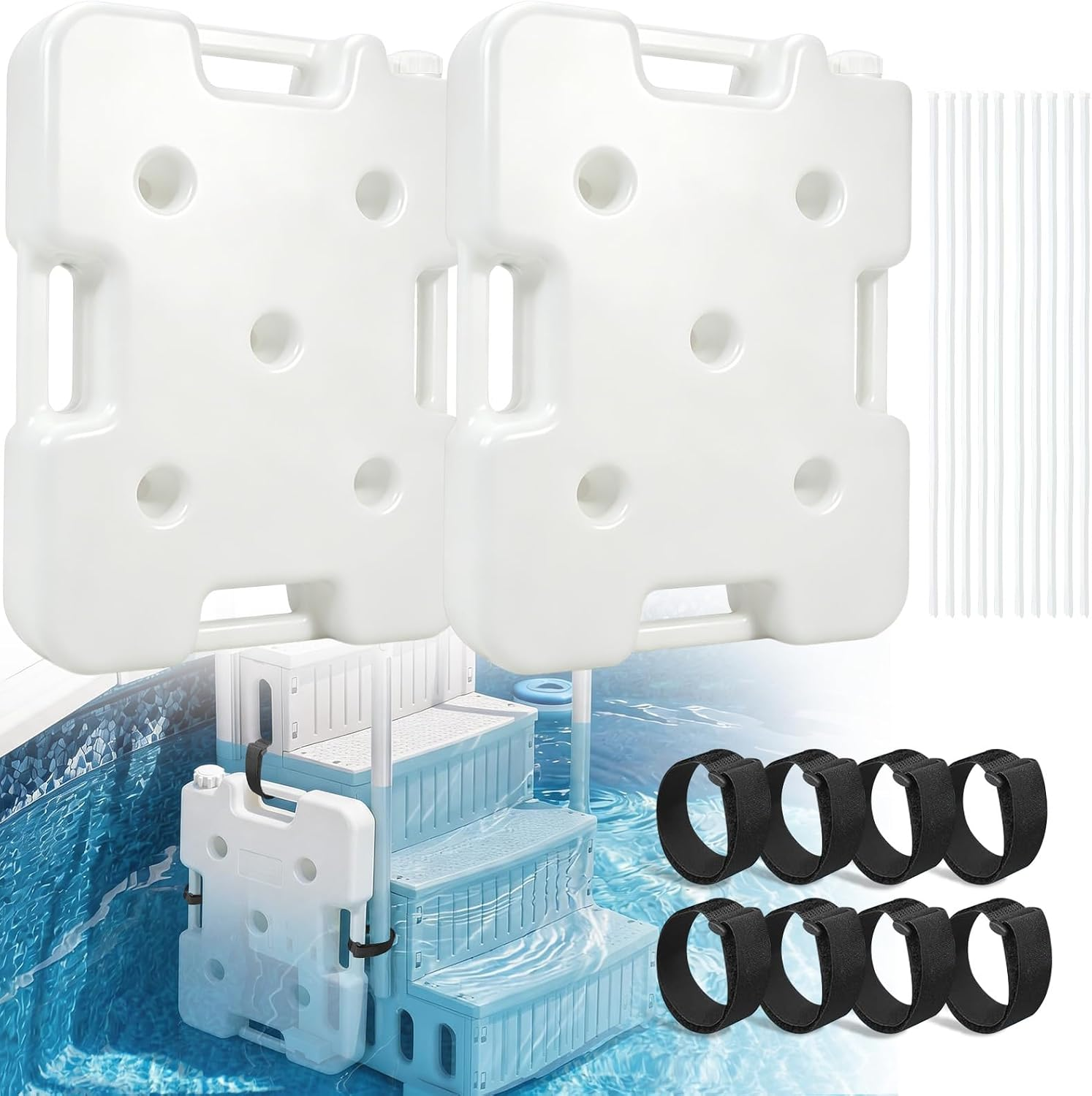
If your steps have no ballast, or still rock after filling, add weights. Our pool ladder weights come in two styles: soft PVC bags you fill with sand, and hard HDPE containers that strap on.
| Weight | Type | Size or capacity | Fill | Extras |
|---|---|---|---|---|
| 60 lb pool step weights | 2 PVC bags | 30 L, up to 60 lb each | Sand | Straps, 35.4 x 9 in mat |
| 25L weights with mat | 2 PVC bags | 25 L each | Sand | 36 x 17 in rubber mat |
| COZYDIG HDPE weights | 2 hard containers | 12.8 x 16.7 x 3.5 in, 96 lb rating | Sand or gravel | 8 straps, 10 cable ties |
| HDPE flat weight boxes | 2 flat boxes | 17.52 x 12.6 x 1.06 in | Water, sand or soil | 8 straps |
The bags are soft, so they drape over a bottom step. On the 60 lb bags, fold the top down at least three times before you snap the buckle, so sand stays out of the pool. The hard containers strap or tie to thicker steps, rails and entry systems, and the screw cap keeps the fill in. The flat boxes are thin, so they sit close against a ladder frame. If they go underwater, fill them with sand, not water.
How to weigh down pool steps with bags or straps
Placement matters as much as weight.
- Keep the weight low, on the bottom step or the base, where it holds the unit to the floor.
- Split it evenly side to side so the unit sits level and does not lean.
- Strap or tie each weight so it cannot slide off when someone steps on the unit.
- Tuck loose strap ends and cable tie tails so no one catches a foot or a hand.
Weights work on ladders too. The same pool ladder weights that hold steps can steady an A-frame ladder that floats or sways. If the ladder itself is loose, start with our guide on how to install a pool ladder and check the setup first.
Check the steps after filling
Do not assume it worked. Get in the pool and test it.
- Stand on each tread and step off. Watch the base. It should stay on the floor.
- Push the handrail side to side. Some flex is normal, but the base should not walk.
- Check that the unit sits level and the feet are flat on the mat.
- Look for sand clouding around caps or bag tops. Tighten or reseal if you see any.
Check again after the first few swims and after any time the pool is drained or the steps are moved. Sand settles, straps loosen and bags wear.
Mistakes that keep steps floating
If you have filled the unit and it still lifts, check for these.
- Water as fill. It looks full but adds almost no hold underwater. Drain it and refill with sand or gravel.
- A partial fill. Air pockets left in a chamber keep pushing up. Top it off to the manufacturer’s amount.
- All the weight on one side. The light side lifts first. Split weights evenly.
- Loose bricks or blocks on the treads. They can slide off, scratch the liner and leave a hard edge underfoot. Use bags or containers made for the job.
- Forcing extra fill. Overfilling can split a seam or keep a cap from sealing. Stick to what the instructions say.
Put a ladder mat under the unit
Steps and weights both press on the pool floor. A mat under the base spreads that load and protects a vinyl liner from the feet. Both the 60 lb bag set and the 25L set include a mat, or you can pick one from our pool ladder mats. Set the mat first, then the steps, then the weights. If you are still choosing a unit, browse our pool steps and read our above ground pool steps guide for more on choosing and placing steps.
FAQ
How to weigh down swimming pool steps?
Fill the ballast compartments with sand, or pea gravel if the manufacturer allows it, in the amount the instructions list. Set the unit on a mat. If it still lifts, add sand bags or strap-on pool ladder and step weights low on the unit.
Can I use water to weigh down pool steps?
Not for anything that sits underwater. Water inside a submerged compartment weighs about the same as the water around it, so it adds almost no hold. Use sand or gravel. Water only helps in weights that sit on dry ground.
How much weight do pool steps need?
Follow the manufacturer’s stated ballast for your model. That figure is set for that design. If the unit still lifts or shifts after you fill it as directed, add weights and test again.