Here is how to measure for a pool ladder. To size an inground pool ladder you need three numbers: the water depth where the ladder will go, the center to center distance between the two deck anchors, and the outside diameter of the ladder tube. For an above ground pool you need the wall height, the width of the top rail and, if you have one, the deck height. Get those right and the ladder fits the first time.
Below is how to measure a pool ladder fit for both pool types, plus the mistakes we see most often when people order a pool ladder for an inground pool.
What you need to measure for a pool ladder
- A tape measure at least 10 ft long
- A strip of paper about 1 in wide and 8 in long
- A pencil and something to write on
- A helper to hold the other end of the tape, if you can get one
Write every number down as you go. If you are replacing an old ladder, measure the old one too. It is the best record you have of what fit before.
How to measure for an inground pool ladder
1. Water depth at the ladder spot
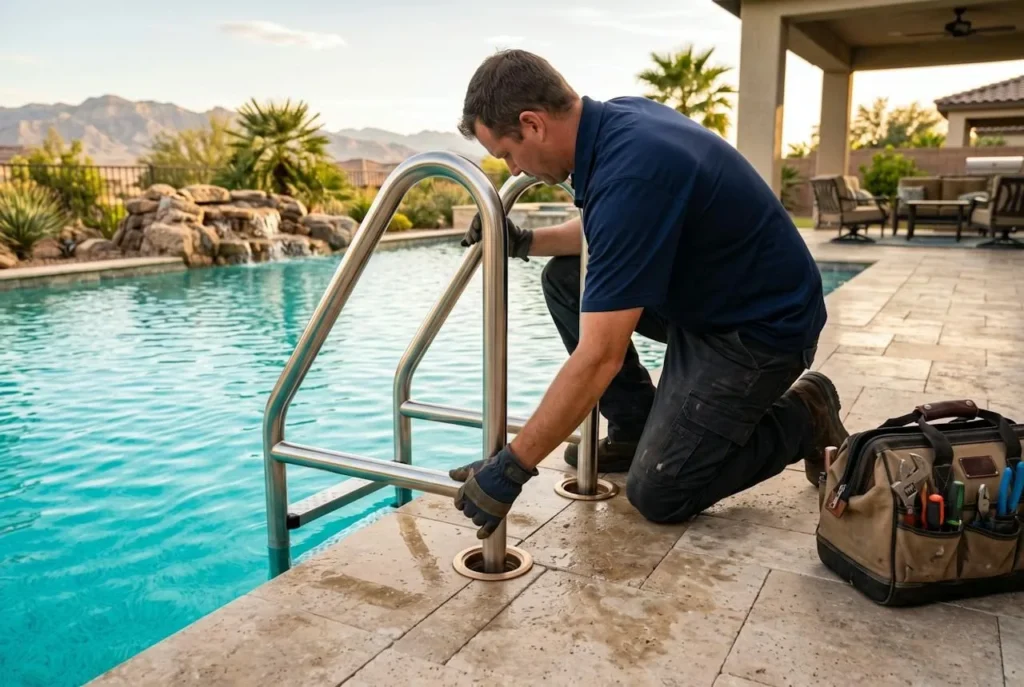
An inground ladder does not stand on the pool floor. It hangs from two anchors set in the deck, and the rubber bumpers at the bottom rest against the pool wall. So the number that matters is how far down the wall the ladder needs to reach.
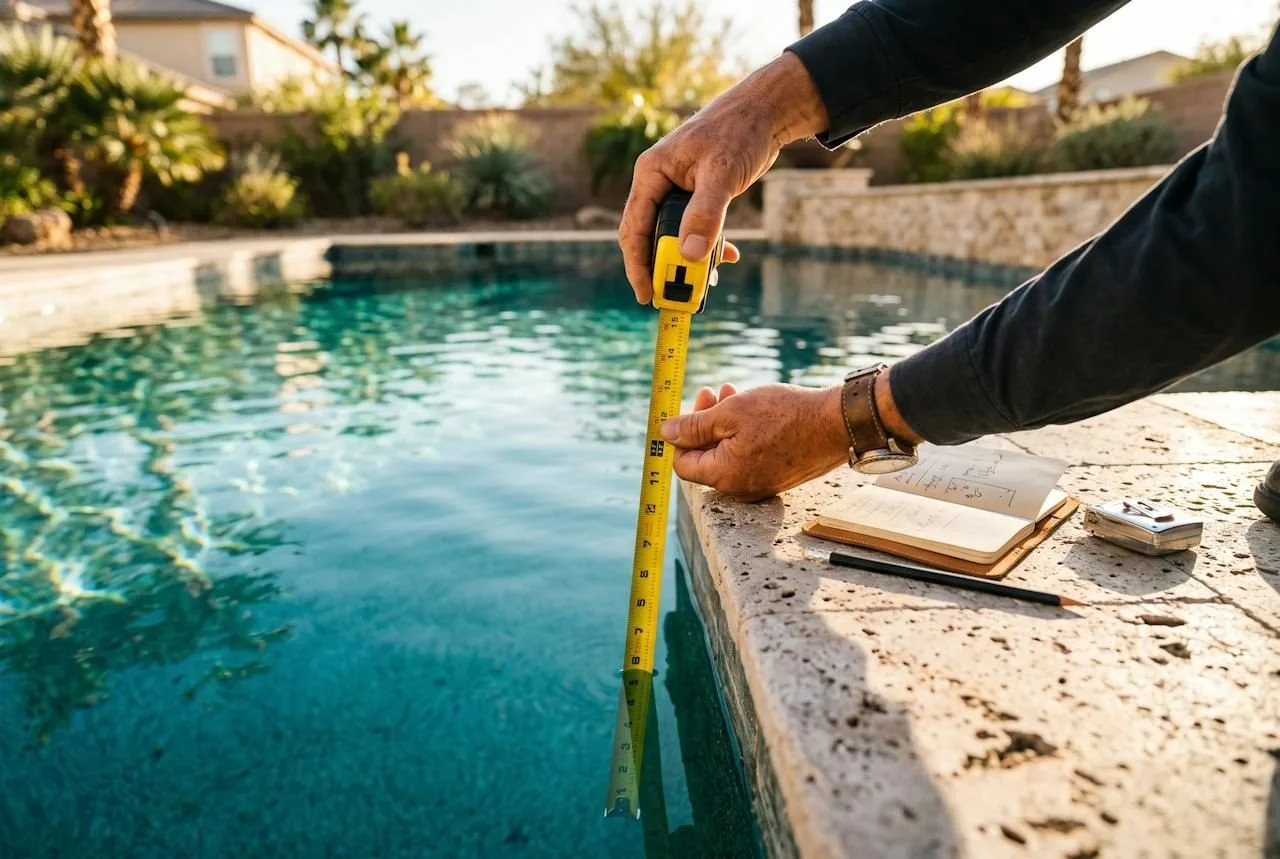
Measure from the top of the deck down to the water line, then from the water line to the floor at the spot where the ladder will go. Inground ladders are sold by step count, usually 2 to 5 steps, and deeper water calls for more steps. Compare your numbers with the overall height and sizing notes for the model. If you fall between two sizes, check the manufacturer’s instructions before you order.
Look at the wall while you are there. The bumpers should land on a flat part of the wall, not on a curve near the floor or on a step.
2. Anchor spacing, center to center
If anchors are already set in your deck, measure from the center of one anchor socket to the center of the other. Do not measure edge to edge, and do not measure the gap between them. Center to center is the number ladder makers work from.
Ladders are built at fixed widths, so the spacing of the ladder rails has to match the sockets in your deck. If it does not, you either pick a different ladder or set new anchors, which means cutting into the deck. If the listing does not show the spacing, ask us before you buy.
3. Tube outside diameter: 1.9 in or 1.5 in
Most inground ladders and handrails use tubing with a 1.9 in outside diameter. Some ladders use 1.5 in tubing, and that size is common on above ground deck ladders and flanges. The two look close side by side, but parts for one will not fit the other. Bumpers, escutcheons, anchors, wedges and replacement steps are all sized to the tube.
Measure the outside of the tube, not the inside. A tape laid across a round tube is hard to read, so use a strip of paper instead.
The paper strip trick
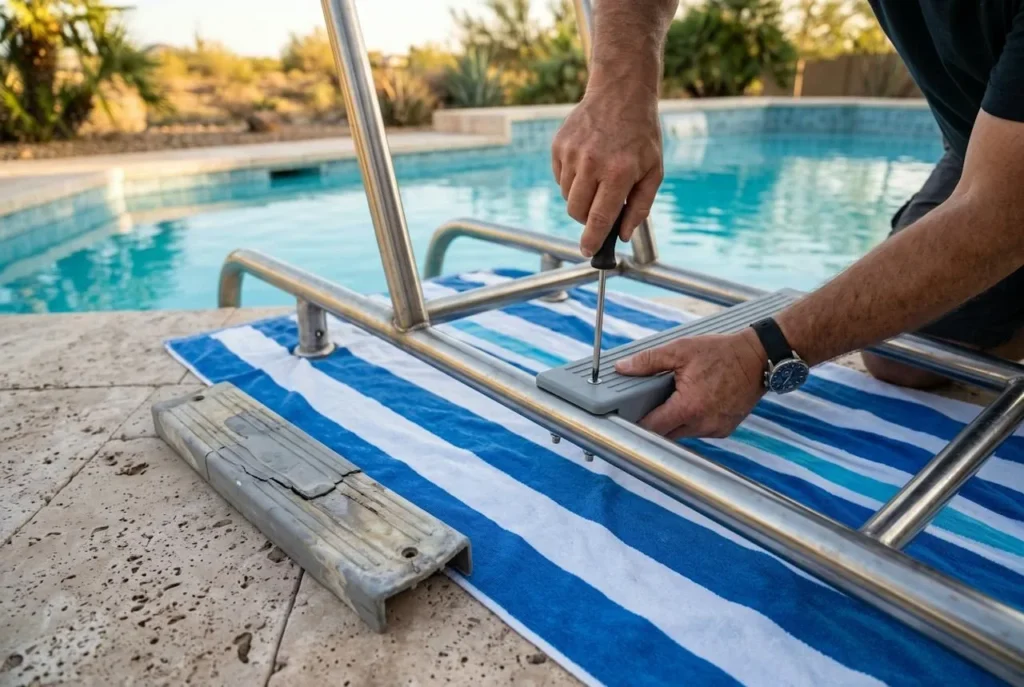
- Wrap the paper strip once around the ladder tube, snug, just above the deck.
- Mark the spot where the paper overlaps its own end.
- Lay the strip flat and measure from the end to your mark. That is the circumference.
- Divide the circumference by 3.14. The answer is the outside diameter.
A 1.9 in tube gives a circumference of about 5.97 in. A 1.5 in tube gives about 4.71 in. If your strip reads close to 6 in, you have 1.9 in tubing. If it reads close to 4.7 in, you have 1.5 in.
Once you know the tube size, parts are simple to match. Our 1.9 inch pool ladder parts kit covers bolts, bumpers, deck anchors or escutcheons for 1.9 in outside diameter tubing.
Choosing an inground pool ladder that fits
With depth, anchor spacing and tube size on paper, compare models in our inground ladder range. A few examples and the specs their listings give:
- The 3 step stainless steel pool ladder is 304 stainless steel with two curved handrails and a 265 lb rating.
- The heavy duty in ground pool ladder has 4 non-slip steps on a stainless frame and a 440 lb rating.
- The 54 inch VEVOR ladder with double handrails is made for 54 in pools with a mounted deck board, stands 71.9 in tall overall and is rated for 265 lb.
Not every listing gives anchor spacing or overall height. When a number you need is missing, ask before you buy instead of guessing. Check the weight rating too, and plan for the heaviest person who will use the ladder.
How to measure for an above ground pool ladder
Wall height
Measure from the ground outside the pool to the top of the top rail. This is the number above ground ladders are sized by, not the water depth. Our steel A-frame ladders show how close the sizes run: the 36 inch A-frame ladder is made for a 36 in wall and the 48 inch A-frame ladder for a 48 in wall. Pick the ladder that matches your wall. If yours sits between two sizes, check the fit range in the manufacturer’s instructions.
Top rail width
Measure across the top rail from the inside edge to the outside edge. An A-frame ladder straddles the wall, so the top of the ladder has to clear the rail. A platform ladder sits over it. A wide rail can push a ladder out of position, so compare your number with the listing or the manufacturer’s instructions.
Deck height
If your pool has a deck, you will likely use a deck ladder that sits in the water and fastens to the deck. Measure from the deck surface down to the pool floor, which on most above ground pools is the ground the pool sits on. Deck ladders list a deck height range, so make sure your number falls inside it. Measure the ladder rail too. Deck flanges are sized to the rail, so a 1.5 in flange will not fit a 1.9 in rail.
When you have these numbers, browse our above ground pool ladders by wall height or deck height.
Common measuring mistakes
- Measuring water depth instead of wall height on an above ground pool.
- Measuring anchor spacing edge to edge instead of center to center.
- Measuring the inside of the tube instead of the outside.
- Ordering bumpers or escutcheons before you confirm 1.9 in or 1.5 in tubing.
- Skipping the weight rating because the ladder looks sturdy.
Not sure which style suits your pool? Our comparison of A-frame, deck and in-pool ladders covers the options. When the new ladder arrives, follow our pool ladder installation guide along with the manufacturer’s instructions.
Frequently Asked Questions
How do I measure a pool ladder?
For an inground pool, measure the depth from the deck to the floor at the ladder spot, the anchor spacing center to center, and the tube outside diameter. For an above ground pool, measure the wall height from the ground to the top rail, the top rail width and the deck height if you have a deck.
What size tubing does an inground pool ladder use?
Most use 1.9 in outside diameter tubing, and some use 1.5 in. Wrap a paper strip around the tube, measure the strip and divide by 3.14 to find out which one you have.
How many steps does an in ground pool ladder need?
It depends on the water depth at the ladder spot. Deeper water needs more steps, and most models come with 2 to 5. Compare your depth with the model’s sizing notes or the manufacturer’s instructions.
Can I put an above ground ladder in an inground pool?
Usually not, because inground ladders hang from deck anchors and above ground ladders straddle the wall or sit on the floor. Some step units are listed for both pool types, so check the listing.