How to install pool ladder kits comes down to the ladder type. Assemble the ladder on a flat surface first, using the hardware in the box. Then fix it in place the way it was designed: an A-frame stands over the wall of an above ground pool, a deck ladder bolts down with deck flanges, and an inground ladder drops into anchor sockets and locks in with wedges. For torque, bolt sizes and the order of parts, follow the manufacturer’s instructions. Last, check that it is solid before anyone climbs it.
How to install pool ladder kits: what to check first
Make sure the ladder fits your pool. Check the wall or deck height against the ladder’s listed range, and read our guide on how to measure your pool for a ladder if you have not done that yet. Then lay out every part and compare it to the parts list. It is easier to find a missing bolt now than with a half built ladder.
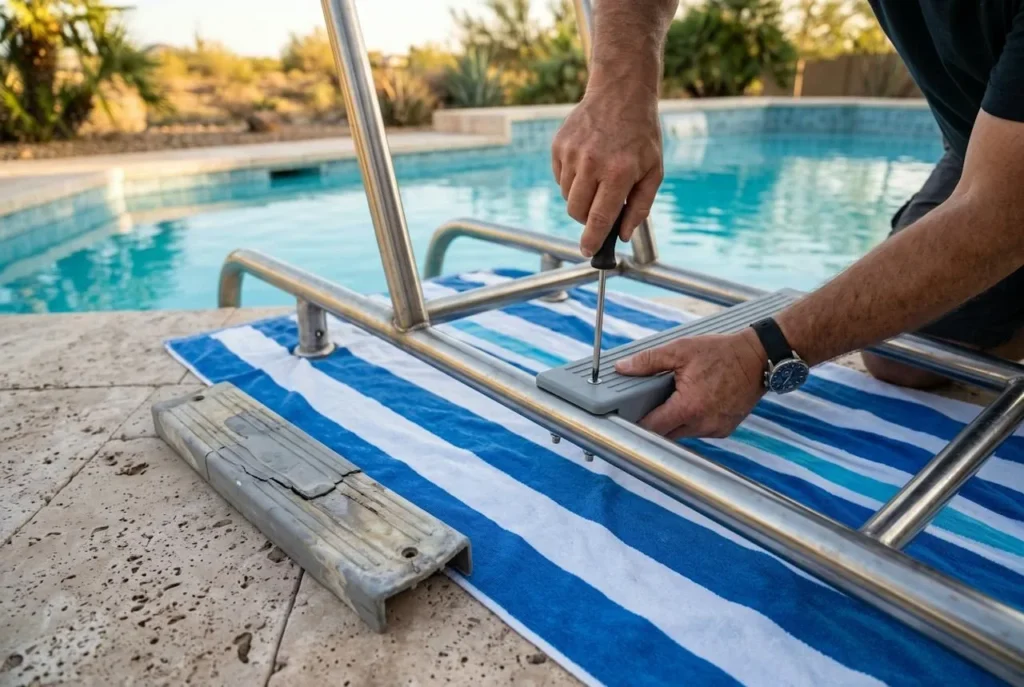
- Work on a towel, a tarp or grass so you do not scratch the rails or treads.
- Have the right wrench or driver for the bolts in the kit.
- Keep small parts away from young children while you work.
- Check the ladder’s weight rating against the people who will use it.
How to assemble pool ladder frames
Most kits follow the same pattern, but your manual has the final word.
- Lay out one side of the ladder. Fit each step between the rails and start its bolts by hand.
- Build the second side the same way.
- Join the sides at the top platform or hinge as the instructions show.
- Stand the ladder up on flat ground and check that it sits square.
- Now tighten every bolt. Snug is enough on plastic treads. Overtightening can crack them.
Tightening only after the frame is square stops the ladder from locking in a twist.
How to install above ground pool ladder frames over the wall
An A-frame ladder straddles the pool wall, with one side inside the pool and one side outside.
- Set a ladder mat on the pool floor where the inside legs will land. It protects the liner.
- Lift the ladder over the wall and lower the inside legs onto the mat.
- Check the outside feet. They need firm, level ground. If the ground slopes, level the soil or set the feet on a solid, flat paver. Do not prop one foot on loose objects.
- Check that the frame stands plumb and that it clears or sits on the top rail the way the manufacturer intends.
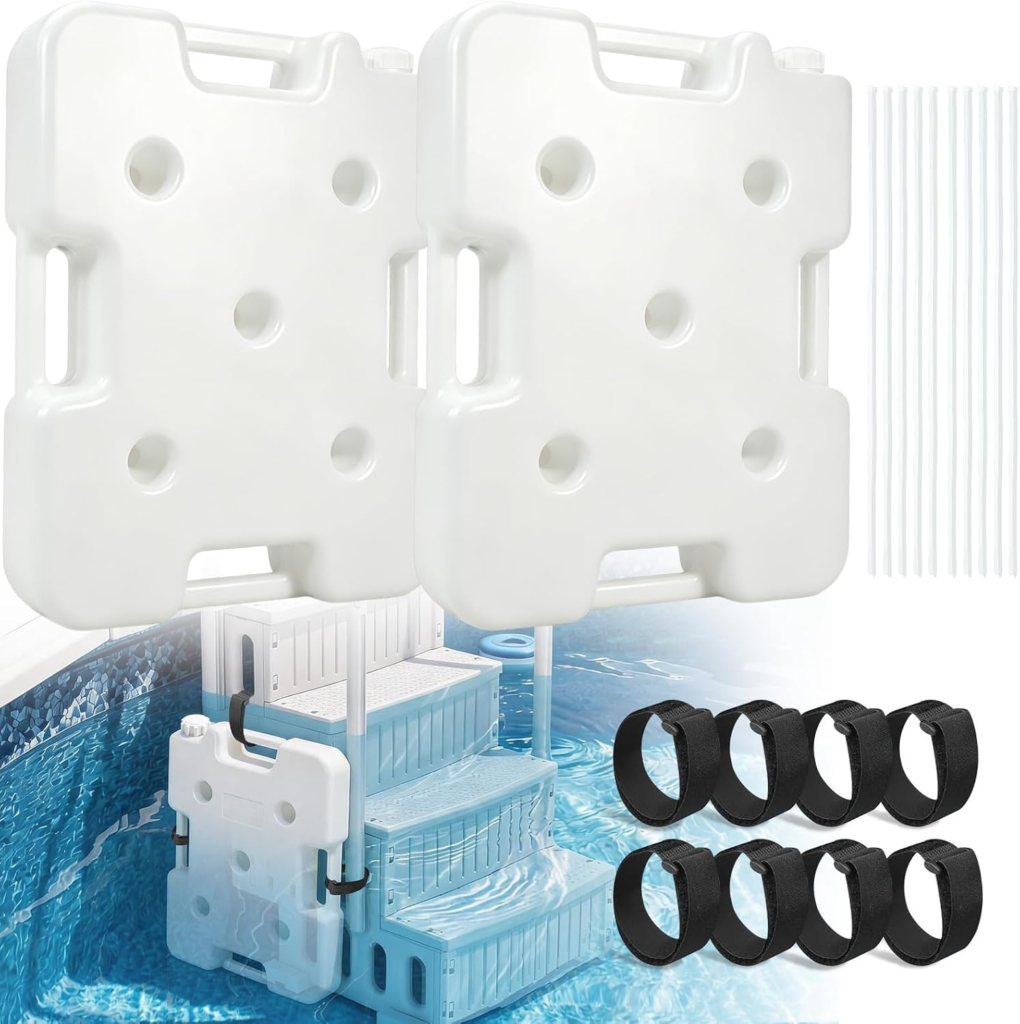
- Add any ballast or weights the manufacturer calls for, so the inside section does not float.
If the inside half lifts when nobody is on it, add sand-filled pool ladder weights low on the frame. You can compare frames in our above ground pool ladders range.
How to attach pool ladder to deck
On a deck ladder, the rails run down into the pool and the top fixes to the deck with flanges. Here is how to attach pool ladder rails to a deck.
- Check the deck. Wood, composite, concrete and resin decks each need suitable fasteners. Soft or rotting boards will not hold a flange, so fix the deck first.
- Measure the rails. The flange has to match the outside diameter of your ladder rail.
- Position the ladder. Set it where it will stand, with the feet resting as the manual shows, and mark the flange holes.
- Fasten the flanges. Where you can, use through bolts with washers and nuts, which hold better than short screws. Follow the manufacturer’s instructions for hardware.
- Lock the rails. Slide each rail into its flange and tighten the locking screw or included hardware.
For rails 1.5 in or less across, the 1.5 inch deck flange 2 pack has three pre-drilled holes and a side locking screw that grips the rail. The cast aluminum deck flange 2 pack surface mounts on wood, composite, poured concrete and resin decks and fits posts up to 1.5 in across. Deck screws for that one are sold separately, so pick ones that suit your deck.
How to install pool ladder rails in inground anchors
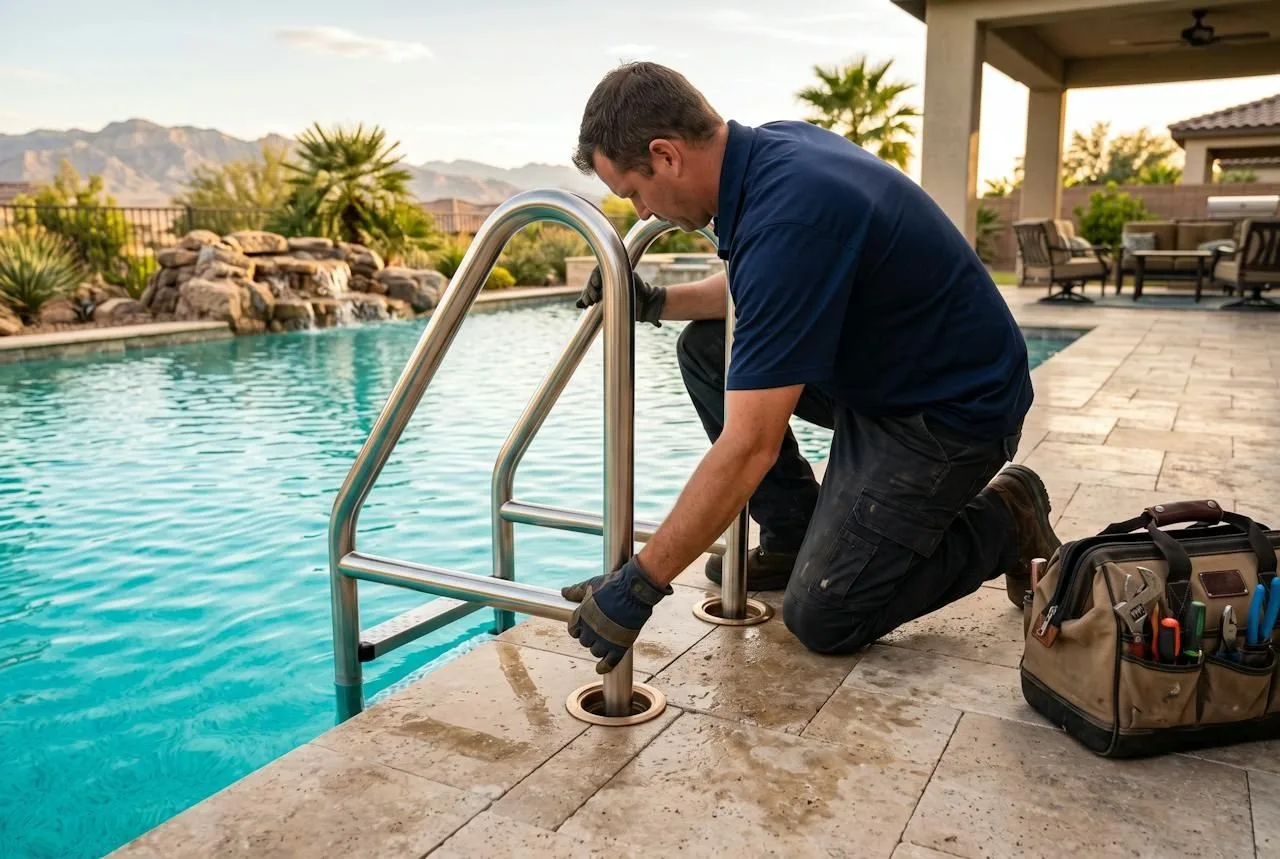
Inground ladders sit in anchor sockets set into the concrete deck. A wedge on a bolt locks each leg in its socket.
- Clean out each anchor. Dirt and grit stop the leg from seating.
- Slide an escutcheon over each tube before the leg goes in. It covers the opening in the deck. The 1.9 inch escutcheon 4 pack fits standard 1.9 in tubing.
- Fit bumpers on the feet that rest against the pool wall, such as these 1.9 inch pool ladder bumpers. They keep bare metal off the wall.
- Lower the legs into the anchors with the wedges in place.
- Tighten each wedge bolt as the instructions show. As it tightens, the wedge draws up and locks the tube in the anchor.
- Slide the escutcheons down flat on the deck.
Worn wedges are a common reason an inground ladder rocks. The PW-4C anchor wedges fit 4 in Hanover style bronze anchors, and the brass wedge anchor kit fits standard 4 in rail anchors. Browse new ladders in our inground pool ladders range.
Check stability before anyone uses it
- Stand on the bottom step and shift your weight. Nothing should rock.
- Grab the rails and push side to side and front to back. Look for movement at the anchors, flanges or feet.
- Check that the bumpers or feet sit flat and touch where they should.
- Recheck bolts and wedges after the first few swims, then every so often through the season.
Cracked bumpers, worn treads and stripped bolts are easy swaps. Find them in our pool ladder parts section, and see the pool ladder replacement parts guide to match sizes.
When to call a pro
Knowing how to install pool ladder hardware yourself does not cover every job. Call a pool contractor when:
- Your deck has no anchors and you need new ones set in concrete.
- An anchor is cracked, loose in the concrete or will not hold a new wedge.
- The deck under a flange is soft, damaged or you are not sure what is under the boards.
- Metal ladders and anchors may be tied into the pool’s electrical bonding. If an anchor needs to be replaced, have a pro or a licensed electrician check that part.
- The ladder is bent or a weld has cracked.
FAQ
How to put a pool ladder together?
Lay out the parts on a soft, flat surface. Attach the steps to the rails with the bolts started by hand, join the sides as the manual shows, stand the ladder up to check it is square, then tighten everything to the manufacturer’s spec.
How to remove a pool ladder?
For an inground ladder, loosen each wedge bolt a few turns, then tap the bolt head down to free the wedge and lift the legs straight out. For a deck ladder, loosen the flange locking screws and lift the rails out. For an A-frame, take off any weights first, then lift it over the wall.
How to stabilize pool ladder?
Tighten the wedges or flange screws, replace worn bumpers and wedges from our ladder parts range, level the ground under A-frame feet, and add weights if the inside section floats.